
Language Arts Update: February 2026

Grade 6 (Cilla)
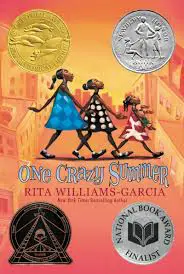
It’s a new semester, and we are starting a new novel: One Crazy Summer by Rita Williams-Garcia. We introduced this novel last week, then read and discussed chapter one. Students noticed the way the novel opens in medias res: in the middle of the action. They were also impressed by how well Williams-Garcia shows (not tells) who these characters are, through dialogue and the narrator’s observations.
In this historical fiction novel, our protagonists attend the Black Panther Free Breakfast and community school in Oakland in the summer of 1968. As an introduction to the Black Panthers, we watched a video about a mural project in Oakland California celebrating the women of the Black Panther Party. Hearing these women leaders discuss the community care the Black Panthers offered to the children and the elderly in Oakland inspired us. We also began reading in groups of three the first chapters of The Black Panther Party: A Graphic Novel History by Anderson and Walker.
Last week, I also introduced the choice-book story arc project. I am asking that students choose a fiction chapter book for this project. Last Thursday, we learned what exposition is, and students are now finding quotes in their books that reveal the setting, the characters, and the main conflict. Once they sort out these elements, they will write a formal paragraph, delineating the exposition of their novel.
I like to show students model assignments in class before each assignment. These are also posted on our Google Classroom for reference. I am grateful to still have some of the posters created for the Story Arc project from last year. Although students can choose to lay out their information digitally or on a smaller piece of paper, many students were inspired to illustrate their novel’s story arc as a large poster.

Grade 7 (Lisa)
In seventh grade, we’ve welcomed back teaching artist Michelle Burce to assist Drama/ELA in introducing students to Shakespeare’s Twelfth Night.
Shakespeare is challenging! The language and customs in the play are far outside the typical experience of a twelve-year-old. Thankfully, using her experience as a working actor, Michelle engagingly leads lessons that help our students understand how to approach an unfamiliar text form, clearly grasp the twists and turns of the plot, and appreciate how taking the time to investigate the text deeply can better inform their acting decisions.
When tasked with a scene, actors consider their characters’ objectives, the obstacles to those objectives, and the tactics they use to get what they want–just like characters in any fiction text. Just as a writer might play around with how their characters might go about obtaining their objective before settling on what actually appears in the text, actors play around with different tactics their characters could use. Do they flirt? Wheedle? Demand? Flatter? Deceive? Taking time to understand how an actor might use different tactics to achieve a goal gives us additional insight into the choices authors make in their stories. What is a character’s goal? What is comes between them and their desire? What are methods a character could use to get what they want? Why do you think an author ultimately made the choices for that character’s actions that they did?
Ask your student what sort of tactics they practiced with their partners in scenes from Twelfth Night!


Grade 8 (Lisa)
Eighth graders are in the midst of a “me-search” project: they are investigating a topic of their choosing and learning how to navigate internet research with some savvy. While their ultimate product will be an expository or persuasive essay, the real goal of this assignment has been to build students’ independent research skills.
We began with the very basics: how to optimize a search query, what the endings of a web address can tell us about an organization’s goals, and how lateral reading can help us differentiate between a strong source vs. a flimsy one. Although our students are digital natives, sifting through and asking good questions of the vast amounts of information on the internet is still very new to them. Skills such as lateral reading, questioning who benefits from information being presented, and learning how to spot bias are all important abilities to take with them into high school.
Ask your student what it has been like to learn to navigate online information. How do they decide a source is worthy of their time and attention? What kinds of questions do they ask themselves when approaching a new source of information? Has anything surprised them in the course of their research? Ask them about their topic of research–it might be fun for you to learn from them!