Science Update: December 2025
Grade 6 (Kristin)
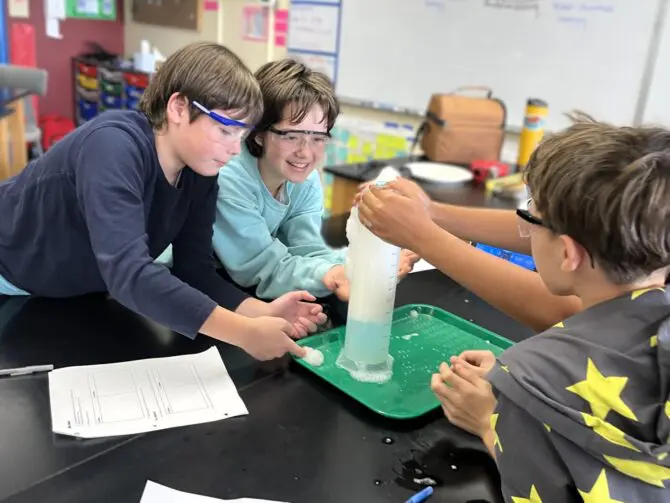
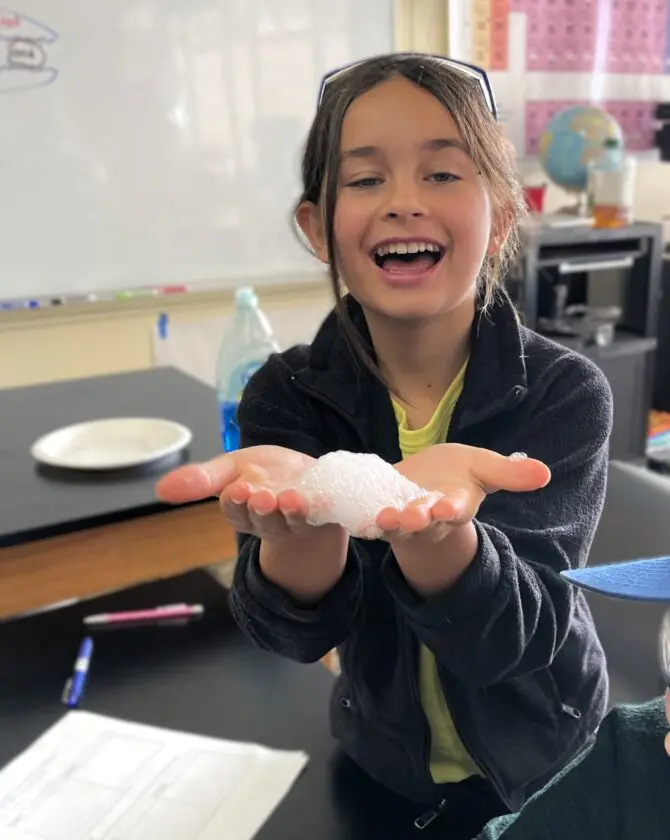
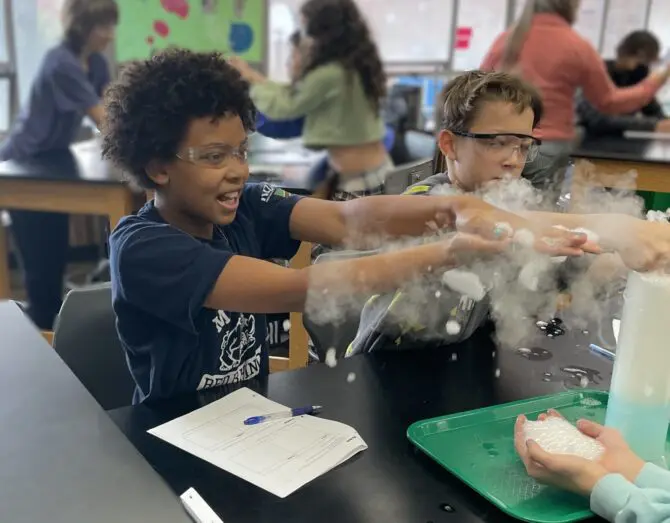
The 6th graders have just completed a unit on the behavior of gases called “Magic or Science?” Students got to put a marshmallow into a vacuum to see what happens as the air pressure inside the marshmallow responds to the lack of pressure.
Cotton ignites at a temperature of 400℃. Students created enough friction inside a “fire syringe” to light a fire! Next up, we’ll be learning about the parts of an atom and how they interact with each other in chemical reactions.
Grade 7 (Virgil)
Seventh graders have started their second unit by exploring a real case study of a middle school girl named M’Kenna, who reported alarming symptoms to her doctor. Her symptoms included an inability to concentrate, headaches, stomach issues when she eats, and a lack of energy for everyday activities and sports that she used to play regularly. She also reported noticeable weight loss over the past few months despite consuming what appeared to be a healthy diet. Her case sparks questions and ideas for investigations around trying to figure out which pathways and processes in M’Kenna’s body might be functioning differently than a healthy system, and why.
Students investigate data specific to M’Kenna’s case, including doctors’ notes, endoscopy images and reports, growth charts, and micrographs. They also draw on results from laboratory experiments on the chemical changes involved in food processing, as well as on digital interactives to explore how food is transported, transformed, stored, and used across different body systems in all people.
Through this work of figuring out what is causing M’Kenna’s symptoms, the class discovers what happens to the food we eat after it enters our bodies and how M’Kenna’s different symptoms are connected.
Grade 8 (Kristin)
In 8th grade science, we’ve been answering the question: How can we be safe living near a volcano? This means understanding what causes volcanoes to erupt and how we monitor them. Staying safe also means knowing what kinds of hazards volcanoes produce.
The final project will be to interpret data sets from two different volcanoes to determine which is more likely to erupt. Then students will write a Public Service Announcement informing residents of a nearby town of the risks and instructing them on what to do.